Tag: Industrial Rock

  • Mortiis The Grudge Review

    General Information:

    Artist: Mortiis
    Album: The Grudge
    Genre(s): Industrial Rock
    Subgenres(s): N/A
    Released: 2004
    Length: 47 minutes
    Language(s): English
    Label(s): Earache Records

    Track List:

    01. Broken Skin
    02. Way Too Wicked
    03. The Grudge
    04. Decadent & Desperate
    05. The Worst in Me
    06. Gibber
    07. Twist the Knife
    08. The Loneliest Thing
    09. Le Petit Cochon Sordide
    10. Asthma
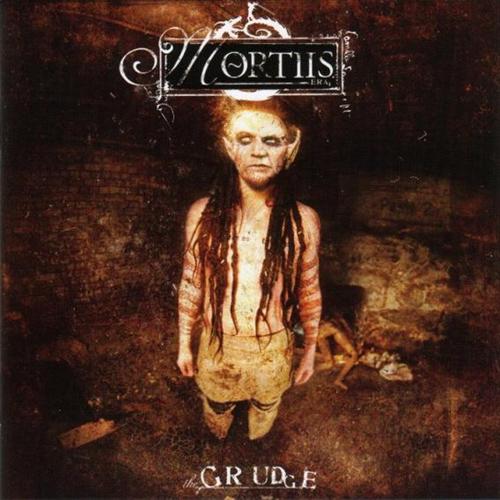
    Mortiis The Grudge Cover
    Mortiis The Grudge Cover

    Mortiis The Grudge Review

    The Grudge is the 7th studio album by Norwegian artist Mortiis. It is the first album in the “Era 3” period of his career and is notable for being the album on which Mortiis evolved from a solo project to a full band as well as continuing the aggressive musical trajectory, which started out as long dark ambient songs before turning into angst-ridden synthpop and now industrial rock for the latest incarnation.

    For a few seconds at the start of Broken Skin, the first song on The Grudge, you could easily be fooled into thinking that the use of synthesisers indicates a continuation of the synthpop sound found on The Smell of Rain. This is until short and sharp static bursts are injected to the mix and after a brief lull in the build-up Mortiis releases a long digitised scream with an assortment of synthesised noise before arriving at the first angst-ridden verse. This contrasts heavily with the chorus which softens up to ambient soundscaping with even-tempered singing over layered. While making use of the typical loud/quiet dynamic in rapid succession is certainly nothing new, what makes it impressive is how the two seemingly contradictory genres are woven together without making the listener think that they’re out of place.

    Decadent & Desperate blends dance rhythms with heavily distorted guitars that explode into life with Mortiis shouting grotty lyrics that echo the songs title to make it one of the most intense moments on The Grudge. On the other hand The Loneliest Thing is almost a sort of industrial rock ballad that describes a woman stealing Gods light “to make her dark night turn in to day” before going into more antitheistic lyrics that touch on the absence of God when her refers to the light at the end of the song and says “and now she throws it away/when God has nothing to say/her God, she threw him away/he never had much to say.”

    Fans of “Era 1” Mortiis will be pleased to know that The Grudge does in fact feature a short 2 and a half minute ambient song called Asthma at the end of the album that will entrance the listener quickly. It rounds off the experience in an unexpected but welcome way but it doesn’t necessarily have the same scope as the old dark ambient material Mortiis produced (mostly due to the short length which will leave you wanting more or playing it on repeat) and the more keen listeners will hear distorted voices and noises subtly planted in the background but it is easy to overlook them if you’re not paying attention.

    The compositions cut out the excessive moments found on The Smell of Rain which makes The Grudge a more concise experience and Mortiis comes across as a much more confident singer and has expanded his range and style by quite a margin in 3 years. He also no longer relies on backing singers nearly as much although Louise Marie Degnzman Pedersen shares the bridge on The Grudge and has a much calmer presence when put next to Mortiis.

    With The Grudge Mortiis will once again catch long-time fans off guard as his musical path progresses through different genres. He will have undoubtedly worked his way into a new niche audience of industrial rock fans at the same time and this album will certainly whet the appetite for future releases.

    Performers:

    Mortiis: Vocals, keyboards, synthesizers, programming
    Levi Gawron: Guitars
    Asmund Sveinunggard: Guitars
    Leo Troy: Drums, percussion

    Additional Performers:

    Vegard Blomberg: Acoustic guitars, keyboards, programming
    Endre Tonnesen: Bass on 1, 5, 7, 8 and 10
    Magnus Abelsen: Bass on 9
    Joe Gibber: Keyboards, programming
    Louise Marie Degnzman Pedersen, Stephan Groth: Backing vocals
    External Links:

    Mortiis on Wikipedia
    The Grudge on Wikipedia

  • Nine Inch Nails The Downward Spiral Review

    General Information:

    Artist: Nine Inch Nails
    Album: The Downward Spiral
    Genre(s): Industrial, Industrial Rock
    Subgenres(s): N/A
    Released: 1994
    Length: 105 minutes
    Language(s): English
    Label(s): Nothing Records, Interscope Records

    Track List:

    01. Mr. Self Destruct
    02. Piggy
    03. Heresy
    04. March of the Pigs
    05. Closer
    06. Ruiner
    07. The Becoming
    08. I Do Not Want This
    09. Big Man with a Gun
    10. A Warm Place
    11. Eraser
    12. Reptile
    13. The Downward Spiral
    14. Hurt

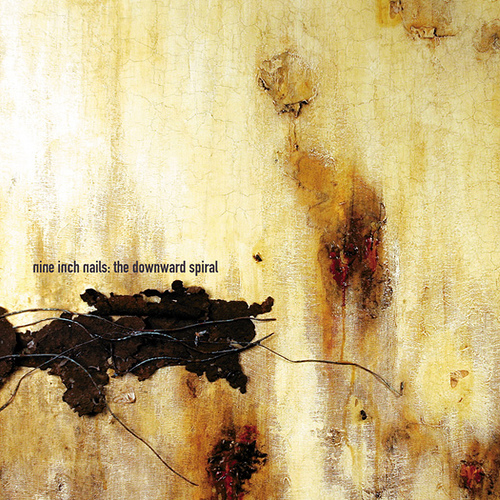
    Nine Inch Nails The Downward Spiral Cover
    Nine Inch Nails The Downward Spiral Cover

    Nine Inch Nails The Downward Spiral Review

    The Downward Spiral is a volatile beacon of industrial music by Nine Inch Nails. Released 2 years after the break through Broken EP, it seems as though Trent Reznor forsook a lot of his rock influences in favour of raw industrial aggression which actually led to a more sonically diverse album.

    Songs like Ruiner, I Do Not Want This and Eraser are all characterised by thumping industrial drum patterns, layers of processed sound effects that are incredibly hard to identify and have enough distortion and noise meshed together to make you think that you’ve blown out your speakers. The guitar is still present in these songs at times but the rock influence is significantly less pronounced when compared to Heresy or March of the Pigs, both of which have an easier structure to follow because a lot of the time the songs don’t follow a particularly strong verse/chorus format.

    While challenging sounds are a given within the industrial music scene, one can’t help but question the need for or motive behind some parts of the album. Particularly the minor noise music influences heard at the end of Mr. Self Destruct, which becomes unlistenable when it devolves into a formless mess at the end, or the chaotic end to Big Man with a Gun that is so layered up and loud that the only thing that can be picked out clearly is Trent Reznor’s frenzied shouting.

    This isn’t to say that the processed sounds and distortion don’t always work because for the most part it is done well and it plays a major part in making The Downward Spiral what it is. In contrast to the dense noise, Big Man with a Gun is followed up by A Warm Place which will keep you on edge the first time you hear it because you can’t help but expect a loud burst of noise to chime in out of nowhere. This doesn’t end up happening and it makes this short ambient piece the most reserved part of The Downward Spiral.

    Despite the length of The Downward Spiral, it rarely feels as though anything gets dragged out and if anything should have been cut out the first thing that comes to mind are the inflammatory lyrics revolving around rape on Big Man with a Gun (“held against your forehead/I’ll make you suck it/maybe I’ll put a hole in your head”). Reptile and Hurt both have crass lyrics as well but aren’t comparable to Big Man with a Gun and aside from that, the rest seems to focus on inner turmoil one way or another and are delivered through shouts, whispers and singing – all of which get at least partially buried under the uncompromising music which was a surprising commercial success. The vocal highlight of The Downward Spiral has to be the cheerfully sarcastic singing on March of the Pigs when the piano is introduced briefly.

    The technology used to produce this album has dated surprisingly well and without knowing beforehand, you can’t pinpoint it to a certain decade like you can with a lot of other electronically produced music. The Downward Spiral is the musical equivalent of a torrent of verbal abuse that encapsulates self-loathing surrounded by a relentless gourmet of industrial rhythms which makes it an ideal introduction to the genre.

    Performers:

    Trent Reznor: Vocals, all other instruments
    Mark “Flood” Ellis: Hi-hat (Closer), synthesizer (The Becoming)
    Chris Vrenna: Drums (Hurt), programming, sampling, additional drums (Burn)
    Adrian Belew: Guitar (Mr. Self Destruct and The Becoming)
    Danny Lohner: Guitar (Big Man with a Gun)
    Andy Kubiszewski Drums (The Downward Spiral)
    Stephen Perkins: Drum Loops (I Do Not Want This)

    External Links:

    Nine Inch Nails Homepage
    Nine Inch Nails on Wikipedia | The Downward Spiral on Wikipedia