Artist: Nails Album: Abandon All Life Genre(s): Rock Subgenres(s): Grindcore Released: 2013 Length: 17 minutes Language(s): English Label(s): Southern Lord
Track List:
01. In Exodus
02. Tyrant
03. Absolute Control
04. God’s Cold Hands
05. Wide Open Wound
06. Abandon All Life
07. No Surrender
08. Pariah
09. Cry Wolf
10. Suum Cuique
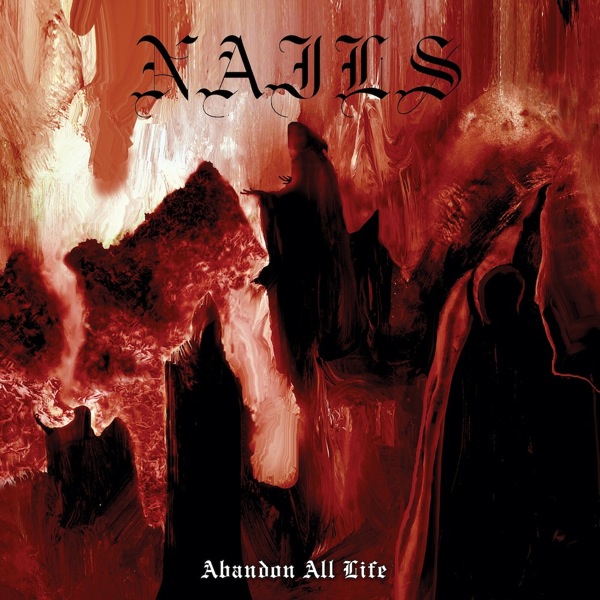
Nails Abandon All Life Cover
Nails Abandon All Life Review
Abandon All Life is the second album by American grindcore band Nails. Three years on from their debut and Nails show no signs of slowing down as they ferociously hammer through another uncompromising batch of micro-songs.
There’s barely a moment to breathe and at 17 minutes long Abandon All Life is somehow as long as it needs to be. To demonstrate the direct and uncompromising mission statement from Nail you need not look any further than the 23 second vignette that is Cry Wolf. It is nothing but sheer auditory terror that also leads to the crux of the problem with this kind of song writing: it’s almost entirely forgettable because it is over before it starts.
This isn’t to say that there isn’t any talent here; it’s simply a case of beyond the raw intensity of their performance you will be hard-pressed to find much else.
With their intense anger, short blasts of chaos and lack of anything even remotely nuanced Nails are squarely on the caveman side of extreme music which will make Abandon All Life a welcome addition to any grindcore collection but for anyone anticipating an expansion on their foundation will be left to look elsewhere.
Performers:
Todd Jones: Vocals, guitars John Gianelli : Bass guitar Taylor Young: Drums Andy Saba: Lead guitar
Artist: Nails Album: Unsilent Death Genre(s): Rock Subgenres(s): Grindcore Released: 2010 Length: 14 minutes Language(s): English Label(s): Six Feet Under Records, Southern Lord
Track List:
01. Conform
02. Scum Will Rise
03. Your God
04. Suffering Soul
05. Unsilent Death
06. Traitor
07. I Will Not Follow
08. No Servant
09. Scapegoat
10. Depths
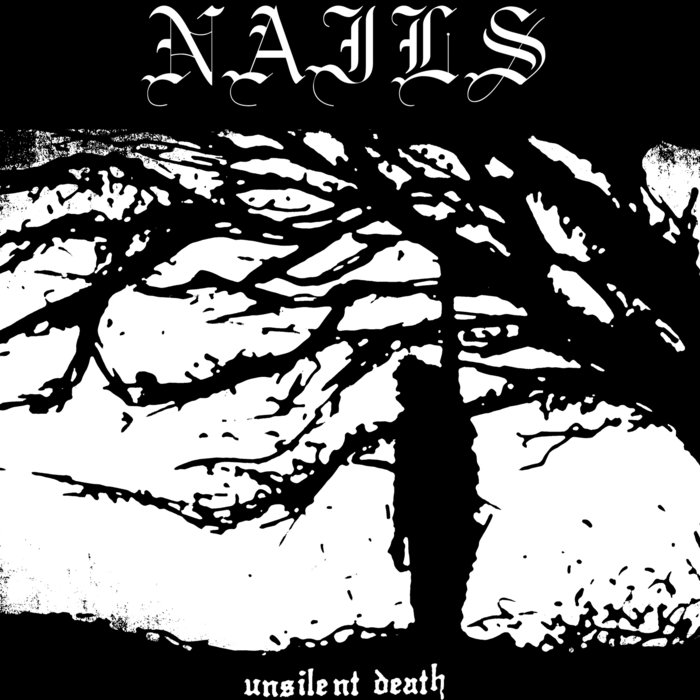
Nails Unsilent Death Cover
Nails Unsilent Death Review
Unsilent Death is the debut album of American grindcore outfit Nails. At only 3 minutes longer than their 2009 EP, Obscene Humanity, this brings the total running time to approximately 14 minutes. For a debut album this is a meagre introduction on the surface because it doesn’t give the impression that you can fit much into such a short span of time.
Nails are quick on the draw to prove the listener wrong and throw you into the middle of their sonic fray with Conform, a 31 second blast straight from the bowels of hell that leads right into Scum Will Rise through feedback noises to continue their sensory assault. This serves as the base-line for Unsilent Death and there’s rarely a moment to remember because of the utter chaos compacted into these micro-songs, of which many are under a minute long, since it’s next to impossible to digest what you hear when most tracks almost start before the last one ends.
Suffering Soul and the title track do manage to slow down and retain some sense of melody, mainly due to the fact that there is a heavier focus on hardcore punk. At best it proves that Nails don’t have an entirely one-track mind and at worst were included for the sake of variety but in either scenario their inclusion works to the advantage of the album. The title track is especially well crafted and includes some of the bands noise elements.
For the listeners who manage to wade their way through Unsilent Death will also pick up on the knack that Nails possesses to do sudden, sharp tempo shifts in a seemingly effortless manner without ever sounding disjointed as demonstrated in the 28 second long track Traitor.
Every musical element from the blasting grindcore sounds to feedback noise and even sludge metal are used on the closing track, Depths, which proves that Nails are capable of far more dynamic compositions when they put their minds to it and they achieve far better results on the few longer tracks on Unsilent Death.
Nails are catering to the furthest ends of the extreme music community and if you happen to have a penchant for short blasts of unrelenting chaos and/or lack anything that resembles an attention span then you will feel right at home with Unsilent Death. For everyone else there isn’t going to be much in the way of replay value bar a few shining moments.
Performers:
Todd Jones: Vocals, guitars John Gianelli : Bass guitar Taylor Young: Drums
Artist: Dope Stars Inc. Album: Neuromance Genre(s): Electronic Rock Subgenres(s): Dance Rock Released: 2005 Length: 59 minutes Language(s): English, German Label(s): Metropolis Records, Trisol Music Group
Track List:
01. 10,000 Watts
02. Infection 13
03. Platinum Girl
04. Mark a Star
05. Vyperpunk
06. Generation Plastic
07. Rebel Riot
08. Theta Titanium
09. Self Destructive Corp.
10. Plug ‘n’ Die
11. Defcon 5
12 Trance-Former
13. C-Beams
Dope Stars Inc Neuromance Cover
Dope Stars Inc. Neuromance Review
Neuromance is the first album by Italian electronic rock band Dope Stars Inc. Naming the album after the cyberpunk novel Neuromancer by author William Gibson, Dope Stars Inc frequently reference dystopian and technological themes in their lyrics which are spliced in with their dance rock hybrid sound.
Right off the bat the listener will find that Dope Stars Inc. lean heavily to the dance side of their influences with the rock side being secondary in most cases. The first song, 10,000 Watts, begins with a stadium crowd shouting and chanting before a garbled robotic voice queues the band to start with a steady rhythm composed of a simple drum machine loop and overlying synthesisers. The guitar doesn’t come into full swing until the chorus and the heavily distorted tone contrasts with the upbeat synthesiser sounds but at the same time it compliments singer Victor Love’s throaty voice.
C-Beams is instrumental aside from some small film samples and it closes Neuromance as one of the more pure electronic songs in that it concentrates on synth driven melodies and the drum machine until the bridge which introduces a low rumbling guitar riff and a stomping drumbeat that changes the tone of the song entirely. On the other hand Theta Titanium is as strong as the name suggests and concentrates almost exclusively on the abrasive guitar. Victor Love almost shouts some of his lyrics here but the real anomaly is that at near 3 minutes into the song everything cuts out and is replaced exclusively with a dance section that slowly builds up for 2 minutes and makes you forget about the punishing nature of the first part of the song before throwing you right back into it.
Platinum Girl is a love song that alternates between a rock verse that is also somewhat reflected in the percussion and a frantic yet brief electronic chorus. This, along with Make a Star, are of a slower tempo than many other songs on Neuromance but the latter seems to have been on the receiving end of a severe brick wall production job that makes it particularly difficult to listen to despite making uncharacteristic use of an acoustic guitar and a melodic guitar solo on one of the songs that focuses on the rock side of their sound.
Despite being Italian all of the lyrics are sung in English with the exception of a verse that is repeated in 10,000 Watts which, as curve ball, is in German. Vyperpunk seems to be about expressing self-loathing and dehumanisation through a virtual reality (“just giving me a VR-place/and kill me every time you want/keep loading shit into my head/it makes me feel like an empty drone”) and digital democracy is referenced in Rebel Riot (“all the networks are casting their own votes/that’s an auction/choosing for election/sweat is running over and over”). Theta Titanium is an apocalyptic song about the destruction and subsequent evacuation of Earth during a war which the protagonist returns to sometime in the future (“I see my Earth again yeah/but I can see just through/the windows of my ship/I see my Earth again yeah/unrecognizable, destroyed by human race”).
While Neuromance does have some short comings, particularly in terms of the overall quality of the lyrics, these can be put down to the fact that Dope Stars Inc. are not native speakers of English and this will improve over time as they progress in their career. Dope Stars Inc. has a unique sound and a lot of potential so it will be interesting to hear how they bridge the gap between rock and electronic music, which is quiet a task in its own right, on their future output.
Performers:
Victor Love: Lead vocals, guitar, synthesizers, drum machine Alex Vega: Guitar Darin Yevonde: Bass guitar
Artist: Mortiis Album: The Grudge Genre(s): Industrial Rock Subgenres(s): N/A Released: 2004 Length: 47 minutes Language(s): English Label(s): Earache Records
Track List:
01. Broken Skin
02. Way Too Wicked
03. The Grudge
04. Decadent & Desperate
05. The Worst in Me
06. Gibber
07. Twist the Knife
08. The Loneliest Thing
09. Le Petit Cochon Sordide
10. Asthma
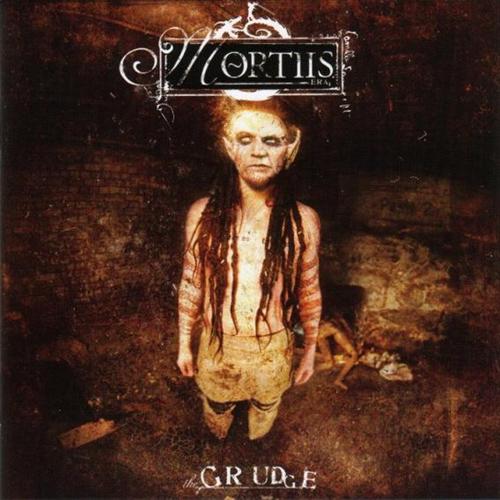
Mortiis The Grudge Cover
Mortiis The Grudge Review
The Grudge is the 7th studio album by Norwegian artist Mortiis. It is the first album in the “Era 3” period of his career and is notable for being the album on which Mortiis evolved from a solo project to a full band as well as continuing the aggressive musical trajectory, which started out as long dark ambient songs before turning into angst-ridden synthpop and now industrial rock for the latest incarnation.
For a few seconds at the start of Broken Skin, the first song on The Grudge, you could easily be fooled into thinking that the use of synthesisers indicates a continuation of the synthpop sound found on The Smell of Rain. This is until short and sharp static bursts are injected to the mix and after a brief lull in the build-up Mortiis releases a long digitised scream with an assortment of synthesised noise before arriving at the first angst-ridden verse. This contrasts heavily with the chorus which softens up to ambient soundscaping with even-tempered singing over layered. While making use of the typical loud/quiet dynamic in rapid succession is certainly nothing new, what makes it impressive is how the two seemingly contradictory genres are woven together without making the listener think that they’re out of place.
Decadent & Desperate blends dance rhythms with heavily distorted guitars that explode into life with Mortiis shouting grotty lyrics that echo the songs title to make it one of the most intense moments on The Grudge. On the other hand The Loneliest Thing is almost a sort of industrial rock ballad that describes a woman stealing Gods light “to make her dark night turn in to day” before going into more antitheistic lyrics that touch on the absence of God when her refers to the light at the end of the song and says “and now she throws it away/when God has nothing to say/her God, she threw him away/he never had much to say.”
Fans of “Era 1” Mortiis will be pleased to know that The Grudge does in fact feature a short 2 and a half minute ambient song called Asthma at the end of the album that will entrance the listener quickly. It rounds off the experience in an unexpected but welcome way but it doesn’t necessarily have the same scope as the old dark ambient material Mortiis produced (mostly due to the short length which will leave you wanting more or playing it on repeat) and the more keen listeners will hear distorted voices and noises subtly planted in the background but it is easy to overlook them if you’re not paying attention.
The compositions cut out the excessive moments found on The Smell of Rain which makes The Grudge a more concise experience and Mortiis comes across as a much more confident singer and has expanded his range and style by quite a margin in 3 years. He also no longer relies on backing singers nearly as much although Louise Marie Degnzman Pedersen shares the bridge on The Grudge and has a much calmer presence when put next to Mortiis.
With The Grudge Mortiis will once again catch long-time fans off guard as his musical path progresses through different genres. He will have undoubtedly worked his way into a new niche audience of industrial rock fans at the same time and this album will certainly whet the appetite for future releases.
Performers:
Mortiis: Vocals, keyboards, synthesizers, programming Levi Gawron: Guitars Asmund Sveinunggard: Guitars Leo Troy: Drums, percussion
Additional Performers:
Vegard Blomberg: Acoustic guitars, keyboards, programming Endre Tonnesen: Bass on 1, 5, 7, 8 and 10 Magnus Abelsen: Bass on 9 Joe Gibber: Keyboards, programming Louise Marie Degnzman Pedersen, Stephan Groth: Backing vocals
Artist: Mortiis Album: The Smell of Rain Genre(s): Electronic Subgenres(s): Synthpop Released: 2001 Length: 51 minutes Language(s): English Label(s): Earache Records
Track List:
01. Scar Trek/Parasite God
02. Flux/Mental Maelstrom
03. Spirit in a Vacuum
04. Monolith
05. You Put a Hex on Me
06. Everyone Leaves
07. Marshland
08. Antimental
09. Smell the Witch
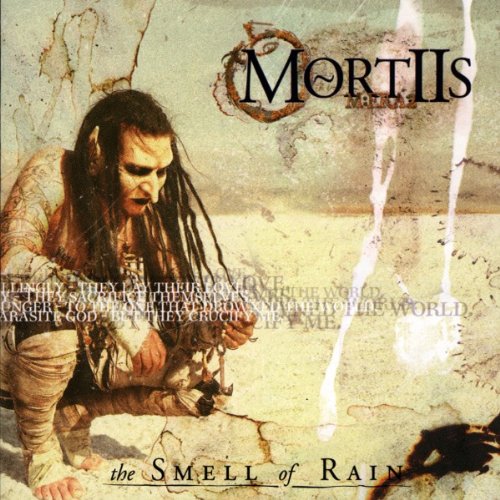
Mortiis The Smell of Rain Cover
Mortiis The Smell of Rain Review
The Smell of Rain is the 6th studio album by Norwegian solo artist Mortiis. This also marks the first and only entry of “Era 2” Mortiis in which he makes an unexpected transition from dark ambient music to synthpop.
This is also the first album wherein Mortiis assumes the role as lead vocalist and while he doesn’t possess the same vocal range or confidence that comes along further into his career, it’s not enough to outright dismiss his performance either. He also enlists additional vocalists including Sarah Jezebel Deva, of Cradle of Filth and Therion fame, for dramatic choral and solo arrangements that are laced together with straightforward distorted guitar work.
Scar Trek/Parasite God addresses contempt for God as Mortiis decries peoples willingness to “…sacrifice themselves/to the locust master, to the one that drowned the world” while saying “yet they crucify me,” presumably for having a simple difference of opinion on theological concerns. Many of the lyrics in other songs revolve around themes of alienation and angst while the final song, Smell the Witch, is more fantasy themed and less detailed in its narrative by comparison.
This is then followed by a two-part song found in Flux/Mental Maelstrom and Spirit in a Vacuum, which adds up to nearly 12 minutes between them, showing that Mortiis hasn’t lost his penchant for longer compositions in their entirety just yet. The long durations of many songs found on The Smell of Rain is also a point of contention due to the fact that they simply don’t need to be as long as they are and a more refined approach would have gone a long way in streamlining the overall presentation of the album.
Monolith breaks the synthpop framework for a dramatic piano and percussion driven number that brings the distorted guitar to the forefront for the bridge of the song and Everyone Leaves is a depressing synth-driven ballad that shows Mortiis at his most defeated as he describes the futility of loss found in the refrain in which he states “everyone leaves. In the end. Everything dies. In the end. It doesn’t matter how hard you hold on.” The build-up in the last minute of the latter song is merciful after around 6 minutes of mope but this song is easily the most stretched out.
Thankfully Mortiis bounces back from Everyone Leaves, particularly on Antimental and Smell the Witch. Both songs feature a cello and violin combined with the synthpop sound Mortiis has crafted but they are far more dramatic and intense than the other songs found on this album. The ending of the final track (Smell the Witch) is sudden but fitting and it will leave you with a good impression of The Smell of Rain, which will have undoubtedly alienated plenty of long-time Mortiis fans on its release but it is an important step in his musical evolution.
Performers:
Mortiis: Lead vocal, keyboards, synthesizers, synth programming, drum programming Martina Binder: Additional lead vocal Sarah Jezebel Deva: Vocal harmonies, soprano vocals Mika Lindberg, “Raptor”, Suvi-Tuulia Virtanen: Alto vocals Chris A: Guitars Alzahr: Bass Staffan Wieslander, Asa Anveden: Cello Cecilia Lindgren, Johanna Wetter: Violin Frederik Bergstrom: Tympani, percussion
Artist: Deftones Album: Gore Genre(s): Rock Subgenres(s): Experimental Rock Released: 2016 Length: 48 minutes Language(s): English Label(s): Reprise Records
Track List:
01. Prayers/Triangles
02. Acid Hologram
03. Doomed User
04. Geometric Headdress
05. Hearts/Wires
06. Pittura Infamante
07. Xenon
08. (L)MIRL
09. Gore
10. Phantom Bride
11. Rubicon
Deftones Gore Cover
Deftones Gore Review
Gore is the 8th studio album by American rock band Deftones. As the band has evolved and implemented new sounds into their repertoire over the years it is self-evident with Gore that they’re still cutting into new territory. This has largely been caused by the conflicts within the band over what direction they should move in and somehow both camps got their way through an amalgamation of post hardcore, post rock, shoegaze and sludge metal in different measures. Some of these genres do already overlap in other musical circles but Deftones have managed to combine them in an entirely new way that most easily placed Gore under the large umbrella genre of experimental rock.
The use of the pop format is still present in many places but there is also a two part song found in Pittura Infamante, meaning “infamous painting” in Italian, and Xenon. This format also works to their advantage by being able to experiment sonically while still appealing to a wide audience.
Chino Moreno’s voice is at times heavily distorted to sound like high pitched radio garble so his lyrics aren’t always easy to recognise, with many of them being cryptic enough to be interpreted in many ways depending on the listener, but he also clings onto his distinct singing voice elsewhere when he isn’t breaking into a shouting frenzy elsewhere.
There are some parallels to be found with their 2006 album, Saturday Night Wrist, in terms of subdued musical elements although the flirtation with trip hop found there and with White Pony (2000) are nowhere to be heard. The opening song, Prayers/Triangles, kicks off Gore with familiar feedback noise from Saturday Night Wrist’s opening song, Hole in the Earth, but instead of launching into a meaty guitar riff it dissolves to introduce the subdued moods that are littered throughout Gore. (L)MIRL follows on much in the same way whereas the title track is much less streamlined and evolves into a massive sludge metal plod towards the end.
There is certainly no hugger-mugger from the variety of influences that have crept into the melting pot that is Gore because everything from the internal conflicts of the bands has managed to be turned into an unexpected advantage rather than a hindrance. How far the pendulum swings from this point on is yet to be seen but if Gore is any indication to go by then Deftones will continue to innovate.
Performers:
Abe Cunningham: Drums Stephen Carpenter: Guitar Frank Delgado: Samples, keyboards Chino Moreno: Vocals, guitar Sergio Vega: Bass Jerry Cantrell: Additional guitars (track 10)
Artist: Leaether Strip Album: Civil Disobedience Genre(s): Electronic Subgenres(s): Electronic Body Music (EBM) Released: 2008 Length: 69 minutes (CD 1), 72 minutes (CD 2) Language(s): English, German Label(s): Alfa Matrix
Track List (CD 1):
01. Civil Disobedience
02. The Damaged People
03. When Blood Runs Dark
04. Bite Until You Taste Blood
05. Jagtvej 69
06. Going Nowhere
07. I Said I’m Sorry
08. Pissing on My Territory
09. It Hurts Doesn’t It
10. One Day
11. The Devil’s Daughter
Track List (CD 2):
01. A Whore for Jesus
02. I Wear Black on the Inside
03. Machineries of Joy (Die Krupps Cover)
04. Snakebite
05. Soul Collector
06. Could Ya, Did Ya
07. In the Arms of a Demon
08. One More Reason
09. The Cradle of Death
10. Stains
11. The Evil in Putin’s Eyes
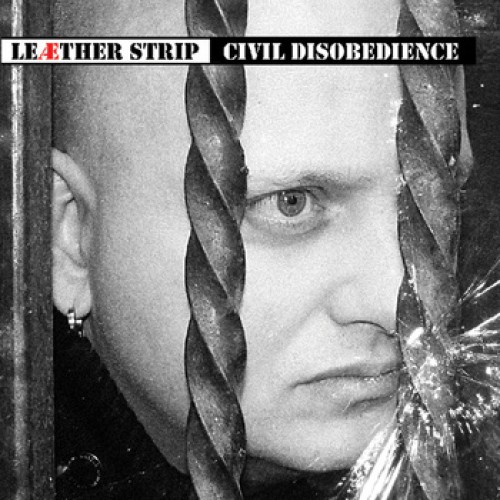
Leaether Strip Civil Disobedience Cover
Leaether Strip Civil Disobedience Review
Civil Disobedience is the 11th studio album (and second double album) by Danish Electronic Body Music (EBM) artist Leaether Strip. Claus Larsen, the sole architect behind Leaether Strip, guarantees two things with Civil Disobedience with the first being a tour-de-force in aggressive dance music paired with subversive lyrics that paint a grim reality.
This is noteworthy early on with The Damaged People, wherein Claus Larsen lists off vignettes of suffering ranging from “the village idiot who made us laugh/until he raped a girl behind the bike shed” to “the dead man on the second floor/no one noticed he was gone until the smell came” and “the gay teenager killing himself/because his parents told him what the world does to faggots”. The last of those could possibly be a reference to his teenage years in which he was in danger of taking his life*.
On the first CD Claus Larsen’s voice ranges from confrontational snarls and shouts to outraged cries of distress (on Going Nowhere in particular) but on the second CD he often sounds more even tempered by comparison. The distorted vocal effects are still implemented across Civil Disobedience in varying degrees to compliment the militant attitude of the music. Some songs also contain voice samples to introduce a lyrical theme with The Cradle of Death, from the second CD, being the most explicit as it is presumably a recording of a soldier or journalist who recalls seeing “scores of people who had been killed, women who had been gang-raped” to “men who had been castrated and been left to bleed to death” … “those are things that we would see nearly every day”.
On the surface you could accuse Claus Larsen of using mere shock value to grab some attention but at the same time it’s entirely possible that this is the result of someone venting his own frustrations with the troubled world he observes. On the politically conscious title track he observes that “politicians use unfair tactics/to scare the people with convenient lies/they want two sides to go against each other/to make us pick the side they want” and Jagtvej 69 addresses the riots in Copenhagen, Denmark in 2007 following the closure and demolition of the Ungdomshuset (The Youth House).
Tired and true loud/soft dynamics with a heavier industrial music influence are used to up the aggressive ante on this song. Starting with a sample of protesters shouting and chanting, the soft piano motif poignantly overlaps them only to be cut down by caustic industrial stylings before it abruptly stops for a haunting solo vocal performance with only soft crackling noises of a fire to create a tense yet sombre atmosphere. The electronic elements are also present in other parts of the song and when they’re used subtly alongside the piano the end result is unquestionably one of Civil Disobedience’s finest moments.
Could Ya, Did Ya is an electro-industrial flavoured song that brings the electric guitar to the forefront and begins with a sarcastic sit-com skit whereas Stains takes a rather gothic twist with an organ arrangement that goes on for a good 3 minutes before the thumping dance beats reappear. There is also a cover of Machineries of Joy, originally by Die Krupps, on the second CD that is sung in both English and German but doesn’t forgo the awkward moaning sounds and manages to be about 2 minutes longer than the original. This leads right into the second guarantee of the Civil Disobedience album: the unholy length of each CD.
The running time of the first CD is 69 minutes and the second is 72 minutes. Matters aren’t helped by the fact that on average each song is nearly 6.5 minutes long so not only will each CD test your patience, there is also the practical question of having the time to be able to sit down and listen to either half properly.
These are some obvious negatives that could have easily been addressed by releasing each CD as a separate album or by shortening some of the songs because the likes of Pissing on My Territory is the shortest song on the album (4 minutes and 43 seconds compared to several that are between 6 and 8 minutes) yet it has some of the most replay value for this very reason.
While Civil Disobedience can feel stretched out on both halves of the album, it shouldn’t diminish the positive qualities found in the dark lyricism that is melded with the spirit of punk rock, particularly in the vocal department, and aggressive dance music because it is a powerful combination that deserves a larger spotlight.
Artist: Frank Turner Album: Campfire Punkrock Genre(s): Folk, Folk Rock Subgenres(s): N/A Released: 2006 Length: 18 minutes Language(s): English Label(s): Xtra Mile Recordings, Good Friends Records
Track List:
01. Nashville Tennessee
02. Thatcher Fucked The Kids
03. This Town Ain’t Big Enough For The One Of Me
04. Casanova Lament
05. I Really Don’t Care What You Did On Your Gap Year
Frank Turner Campfire Punkrock Cover
Frank Turner Campfire Punkrock Review
Campfire Punkrock is the first solo release of British folk musician Frank Turner. Taking the form of an acoustic folk EP, he departs from the punk rock sound of his previous band, Million Dead, entirely and it’s evident from the get-go that his voice is much more suited to the stripped down folk sound he has opted for.
His earnest lyricism always takes centre stage with the first song, a folk rock number titled Nashville Tennessee, acts as a sort of introduction to himself and his self-awareness when he sings “from the start, the land scaped my sound, before I’d ever been to America” as well as other references to his transatlantic influences while lacking knowledge of American geography from which they come. There’s also a sarcastic undertone to be found when he claims “and if I knew anybody who played pedal steel guitar/I’d get them in my band and then my band would get real far” as he points out the conventions, or formula, of country music that influenced him while defending himself by saying “and yes I’m in four-four time, and yes I use cheap, cheap rhymes/but I try to make a sound my own” and concludes his observations with a simple and honest mission statement of “the only thing I’m offering is me”.
This Town Ain’t Big Enough For The One Of Me continues the upbeat folk rock sound to sing about escaping from his current town of residence and cites “…talking to girls hazardous to my health. They’ve been in this gene pool so long they’ve got wrinkled toes” and “I still want to be buried here, just like I said but I’d prefer it if you’d wait until I’m actually dead” as his concerns whereas Thatcher Fucked The Kids shows a completely different side of Frank Turner.
He drops his backing band for a solo song using only his voice and acoustic guitar to dive into the world of protest songs. As the title implies, it focuses on former British Conservative Prime Minister Margaret Thatcher and how she affected the youth of society in his eyes. The punk rock passion flairs up in his scathing analysis which ranges from calling children “a violent bunch of bastard little shits” to addressing the upper class reducing social mobility by saying that “as they were settled as the richest of the rich/they kicked away the ladder, told the rest of us that life’s a bitch”.
Casanova Lament and I Really Don’t Care What You Did On Your Gap Year shake things up further in terms of song-writing as they are low-key compared to the first three songs. The former being from the school of sad sounding singer-songwriters sitting on a stool sullenly and the latter brings the backing band into the mix again but without the energy that grips the listener at the beginning of Campfire Punkrock. This leaves the EP flagging a bit towards the end but Frank Turner’s ability to tell stories and convey his thoughts through matter-of-fact lyrics are the biggest strength and draw of Campfire Punkrock that will keep listeners attentive.
Performers:
Frank Turner: Acoustic Guitar, Vocals Ben Lloyd: Electric Guitar Nigel Powell: Drums Tarrant Anderson: Bass
Artist: Darkspace Album: Darkspace III I Genre(s): Ambient, Heavy Metal Subgenres(s): Black Metal, Dark Ambient Released: 2014 Length: 64 minutes Language(s): N/A Label(s): Avantgarde Music
Track List:
01. Dark 4.18
02. Dark 4.19
03. Dark 4.20
Dark Space Dark Space III I Cover
Darkspace Darkspace III I Review
Darkspace III I is the fourth album by Swiss black metallers Darkspace. Aside from every album having similar cover art work and following the same numerical sequence for song titles, they also repeat the same challenging run time with overly long songs blended together by using dark ambient segments. On the surface this description makes Darkspace sound as though they’re following the same rigid pattern as their older output, which begs the question of what’s new?
Perhaps the most obvious change is in the recording quality because while Darkspace still insist on overloading the listener on high-density distortion, it doesn’t bare the same intensity of their earlier output and with Dark 4.19, their sound is refined to a significantly more accessible style that relies on simple and repetitive guitar riffs between the prevalent buzz-saw guitar and muffled blasting drum sections that can often go on for minutes at a time, which Dark 4.18 will acquaint you with soon enough.
All three band members are credited for vocal duties but this is by far the most irrelevant part of the album because not only are they so sparsely arranged throughout these monstrously long songs, they are also completely unintelligible and buried under a mountain of distortion so it’s impossible to make anything of them. The only exception to this is the use of a small sample from the film 2010: The Year We Make Contact on Dark 4.20
It’s also worth noting that this album is effectively a singular song broken down into three parts which are then stitched back together through the use of dark ambiance. In spite of the ambition and overall length of Darkspace III I, it would be a far cry to call this progressive metal due to the sheer repetition (if nothing else) and if it was to be cut down then you could easily have an album at half the length and twice the replay value.
In short it’s best to say that this is business as usual for Darkspace. Existing fans will probably be delighted by it and for everyone else it’s going to be a question of being able to put time aside to listen to it uninterrupted.
Artist: Napalm Death Album: Smear Campaign (Limited Edition) Genre(s): Rock Subgenres(s): Grindcore Released: 2016 Length: 54 minutes (including bonus tracks) Language(s): English Label(s): Century Media
Track List:
01. Weltschmerz
02. Sink Fast, Let Go
03. Fatalist
04. Puritanical Punishment Beating
05. When All is Said and Done
06. Freedom is the Wage of Sin
07. In Deference
08. Short-Lived
09. Identity Crisis
10. Shattered Existence
11. Eyes Right Out
12. Call That an Option? (Bonus Track)
13. Warped Beyond Logic
14. Rabid Wolves (For Christ)
15. Deaf and Dumbstruck (Intelligent Design)
16. Persona Non Grata
17. Smear Campaign
18. Atheist Runt (Bonus Track)
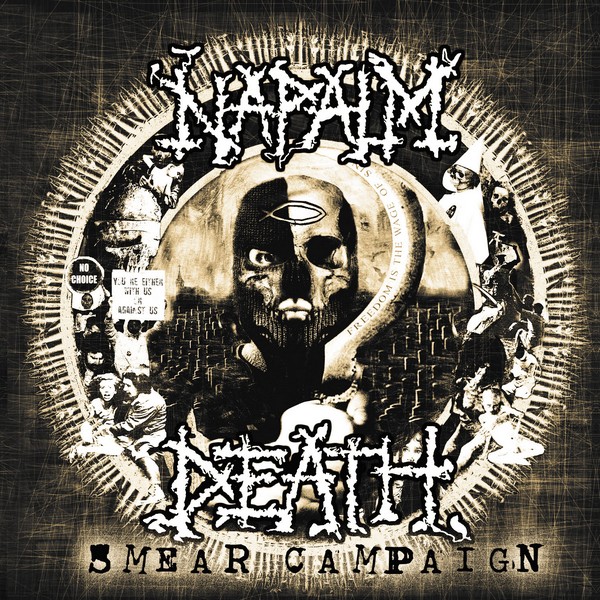
Napalm Death Smear Campaign Limited Edition Cover
Napalm Death Smear Campaign Limited Edition Review
Smear Campaign is the twelfth studio album by British grindcore pioneers Napalm Death. While many of their albums from the 1990s to the first half of the 2000s walk the line between death metal and grindcore, the punkish approach to song-writing pushes Smear Campaign further towards the grindcore camp this time around.
Despite the overtly chaotic nature of Smear Campaign, the music is relatively straightforward with the raw intensity coming from the self-described blast beat terrorism drumming of Danny Herrera and the combined guttural performances of lead vocalist Mark “Barney” Greenway and bassist/backing vocalist Shane Embury while Mitch Harris provides feral high pitched shrieks for contrast.
For this reason alone the lyrics are largely undecipherable without having a written copy in front of you for reference. In some ways this is quite a shame because Napalm Death brings a much needed intellectual counter balance to extreme music lyrics which offset the staple diet of guts, gore and cartoonish bellyaching about the woes of the world. Instead they deliver sharp and direct criticism of religion and society, the main themes of Smear Campaign, without the tired and overused approach of most other bands that tackle the subject.
Early on the band addresses the philosophical concept of fatalism, on the song Fatalist no less, to proclaim that “existing becomes a prison where self-discovery’s forbidden”. Since Fatalism is the belief that all actions are predetermined (fated to happen) then there’s no control or changing of any unfolding events. It is then concluded at the end of the song that “any fool starting afresh would surely ditch this/after two-thousand years of schism/only irreligious hearts can do the saving” so as to offer a solution in saying that a new, non-religious train of thought must take hold within society to make progress for the betterment of everyone instead of clinging on to ideologies that were developed thousands of years ago and don’t necessarily apply to modern life.
The theme of societal progress and anti-religion is reinforced with the chorus to When All is Said and Done, which proclaims that “when all is said and done/heaven lies in my heart/no slave to beliefs that propagate pain/when all is said and done/heaven lies in our hearts/this life is a gift to be lived and loved” to reject ideologies that harm people and strip away the value of life itself.
Along with the critical lyrics comes an added sense of melody and experimentation in some instances because, after all, there is only so far you can push outright aggression before you repeat yourself or begin to stagnate. Some notable moments include the industrial influenced introductory song, Weltschmerz, which includes a wordless vocal contribution from Anneke van Giersbergen (The Gathering), who also performs the monotonous spoken word piece on In Deference. On paper this comes across as an odd pairing but it is probably the only way that her voice could fit into this kind of music and the end results are effective in blending her voice to the cacophony around her without coming across as forced experiment for the sake of it.
Smear Campaign closes with a 3 part mini-epic that will easily catch many fans off guard. Persona Non Grata is the first part and sees Napalm Death using measured aggression to play off against slower moments with growled vocals performed in a melodic fashion that will make you think that the band are about to burst into clean singing at any second. Sludge metal is then embraced for the miniature title track along with the more melodic singing style that turns into a sort of echo-laden chant before fading out and concluding the album on the standard edition.
On the limited edition this then leads into the second bonus track and third part of the mini-epic, Atheist Runt, which is the slowest and longest song on the album at nearly 7 minutes long. This will prove to be quite a test for some fans due to the slow nature of it and yet it is by far one of the most rewarding moments of the whole album if you appreciate the bands decision to branch out and do something a bit different.
Underneath what will sound like the utter chaos of a battlefield to most people, Napalm Death have artfully fused thoughtful lyrical content and a bold experimental edge into their frantic grindcore blueprint to prove that they are as innovative on Smear Campaign as they were at their inception.
Performers:
Mark “Barney” Greenway: Shouting, Screaming, Swans, Sermons (Lead vocals, lyrics on 1-4, 6-9 and 11-6) Shane Embury: Four Strings of the Apocalypse, NY Aggro Lung Assault (Bass, backing vocals, lyrics on 5 and 10) Mitch Harris: Shredding, Grinding, Subliming Noise, Shrill Cries (Guitar, backing vocals) Danny Herrera: Blast Beat Terrorism (Drums) Anneke van Giersbergen: Additional vocals (1 and 7)
Artist: Easy Star All-Stars Album: Until That Day Genre(s): Reggae Subgenres(s): N/A Released: 2008 Length: 25 minutes Language(s): English Label(s): Easy Star Records
Track List:
01. Got to Get Away
02. Bed of Rose
03. Like the Stars
04. Until That Day
05. The Finest
06. Dubbing Up the Walls
Easy Star All-Stars Until That Day Cover
Easy Star All-Stars Until That Day Review
Until That Day is the third release by reggae collective Easy Star All-Stars. Following the success of their first two albums, reggae and dub interpretations of Pink Floyd’s The Dark Side of the Moon (Dub Side of the Moon) and Radiohead’s Ok Computer (Radiodread), Easy Star All-Stars released an EP of original material.
The first thing that you will notice when listening to Until That Day is the number of distinctly different vocalists that appear on this 25 minute EP. They range from the smooth vocal melodies of Junior Jazz on Got to Get Away and Tamar-kali on Like the Stars to the frantic “WAAAH” cries and rowdy vocal delivery of Menny More on Bed of Rose and The Finest as well as Until That Day, which shows him in a more restrained role.
These conflicting styles, while well executed, are the biggest dividing line on the EP because some of them hardly sound like they belong on the same release. However, being an EP as well as the first body of original work from Easy Star All-Stars, it could be seen that the intention is to show off a variety of styles to avoid being pigeon-holed one way or the other following their successful reworking of two famous albums.
With the first song, Got to Get Away, the focus is placed on vocalist Junior Jazz and his lyrics which deal with stress and enduring it through the Rastafari faith (they’re fighting everything I do/but with the help of Jah I’m going through). The relaxed nature of the song combined with the positive lyrics make for a welcoming introduction to the EP whereas Bed of Rose quickly shakes things up with an alarm-like brass section accompanied by the frantic “WAAAH” cries of Menny More, which are matched by the choppy drum fills near the end of the song to shake up the pace early on.
Rastafari themes return more extensively on the titular song courtesy of Ras I Ray and this could alienate some listeners who are not familiar with the religion but the infectious nature of the song will win over many listeners regardless of the lyrics because the lively brass arrangement proves to be the single biggest earworm on the EP.
The final song, Dubbing Up the Walls, is a dub remix of their Climbing Up the Walls cover from the aforementioned Radiodread album. Starting out with a slow and ominous brass bellow, this version places a much bigger emphasis on mood by making liberal uses of percussive echoes and low, unassuming bass playing to go along side Tamar-kali’s disembodied voice which sits in between the other instruments instead of on top of them as heard on Like the Stars.
The only real divisive element found on Until That Day will be determined the listeners own preference in singers and to a lesser extent some of the lyrical content. However the well-arranged brass instrumentation littered throughout the EP, along with the overall positive message put forward, will most likely win over new listeners.
Performers:
Jenny Hill: Sax, flute Ras I Ray: Bass, lead vocals (track 4), backing vocals Junior Jazz: Guitar, lead vocals (track 1), backing vocals Ivan Katz: Drums, percussion Jeremy Mage: Keyboards, programming (track 5) Menny More: Lead vocals (tracks 2 and 5), DJ vocals (track 4) Buford O’Sullivan: Trombone Tamar-kali: Lead vocals, (tracks 3 and 6), backing vocals Pam Fleming: Trumpet (track 5) Victor Axelrod (Ticklah): Organ (track 6) Michael Goldwasser: Guitar, percussion (track 6) Victor Rice: Bass (track 6)
Artist: Sabaton Album: Heroes Genre(s): Heavy Metal Subgenres(s): Traditional Metal Released: 2014 Length: 37 minutes Language(s): English Label(s): Nuclear Blast
Track List:
01. Night Witches
02. No Bullets Fly
03. Smoking Snakes
04. Inmate 4859
05. To Hell and Back
06. The Ballad of Bull
07. Resist and Bite
08. Soldier of 3 Armies
09. Far from the Fame
10. Hearts of Iron
Sabaton Heroes Cover
Sabaton Heroes Review
Heroes is the 7th studio album by Swedish heavy metal band Sabaton. Following the announcement on 31st March 2012 that 4 members had simultaneously departed the band, lead vocalist, primary songwriter and now keyboardist Joakim Brodén and bassist Pär Sundström were saddled with the arduous task of reforming the line-up. With 3 new band members being brought into the fold it would be difficult to guess what would happen after such a heavy blow was dealt.
Heroes sees the sound of Sabaton moving away from the realm of power metal and drawing closer to traditional metal with their secret weapon, the voice of Joakim Brodén, being made the focal point of every song. His powerful and charismatic performance commands the listeners’ attention while bassist Pär Sundström and guitarists Chris Rörland and Thobbe Englund all double up as backing vocalists to add a real anthemic quality with their gang vocal delivery.
Long-time Sabaton fans will be familiar with the lyrical content largely revolving around military history and Heroes is no exception although a slightly different approach is taken because each song is used to sing the praises soldiers who exemplified humanity, bravery and valour while often facing dire circumstances in historical battles.
The lyrics take on a central role in songs that are heavily informed by pop song structure and length so they can appear to be direct and nondescript. This is a hindrance from a storytelling perspective because they don’t always delve deep enough to explain the situation that these people find themselves in so if you aren’t familiar with them or the battle in question then you won’t be able to appreciate what Sabaton are trying to convey. However if you spend a few minutes researching the subject matter you will be able to apply your own knowledge to the lyrics and fill in the gaps yourself to bring greater meaning to the songs.
Aside from some lyrical short comings there is also a notable deficit between the guitar riffs played during the verse/chorus sections and the lead guitar parts that burst into life during the bridge on songs like Night Witches, Smoking Snakes and Far from the Fame. These moments are often accompanied by more exciting drum parts courtesy of Hannes van Dahl and there seems to be a recurring theme of their skills being downplayed in favour of the aforementioned focus on anthemic choruses.
The first 3 songs establish exactly what Heroes is about and while many of the others follow suit, Inmate 4859 takes on a much slower and darker tone to tell the story of Witold Pilecki, a Polish soldier who infiltrated Auschwitz as a prisoner to gather intelligence on the camp and the holocaust before escaping to report his findings.
To Hell and Back features the tasteful use of a (synthesised) flute and some minor folk influences without crossing over into folk metal while the power ballad, The Ballad of Bull, features a piano, choral singing and a string section that frames Joakim Brodén’s voice in an entirely different setting and works to great effect. This is easily one of the biggest highlights of Heroes and the total change of pace breaks up the albums flow without losing any of the power or conviction found in the other songs.
The emphasis on hooks and simple arrangements shows that these songs were written with a live audience in mind because that same essence of power and engagement found at a concert is captured on Heroes although a healthier balance between this and more moments that would have shown off the skills of the new band members would have yielded some more exciting (and varied) results overall.
Performers:
Joakim Brodén: Lead vocals, keyboards Pär Sundström: Bass, backing vocals Chris Rörland: Guitar, backing vocals Thobbe Englund: Guitar, backing vocals Hannes van Dahl: Drums
Artist: Ihsahn Album: The Adversary Genre(s): Heavy Metal Subgenres(s): Black Metal, Progressive Metal Released: 2006 Length: 50 minutes Language(s): English Label(s): Candlelight Records, Mnemosyne Productions
Track List:
01. Invocation
02. Called by the Fire
03. Citizen
04. Homecoming
05. Astera Ton Proinon
06. Panem et Circenses
07. And He Shall Walk in Empty Places
08. Will You Love Me Now?
09. The Pain is Still Mine
Ihsahn The Adversary Cover
Ihsahn The Adversary Review
The Adversary is the debut solo album of Emperor front man and multi-instrumentalist Ihsahn. The sound of The Adversary is a continuation of the black metal and progressive metal hybrid that Emperor experimented with on their final album, Prometheus: The Discipline of Fire & Demise.
Starting with Invocation, the listener gets a compact overview of what direction Ihsahn is taking as he introduces The Adversary with an intense black metal verse with matching lyrics and a screeched vocal delivery to invoke apocalyptic imagery before crying “let it all come down” which is appropriately accompanied by relentless blast beat drumming, courtesy of Asgeir Mickelson, to tie the lyrics and music together in a dramatic style.
Keyboards are employed as a background instrument in both the hard and soft segments of the song, the latter of which lasts for about 2 minutes after the explosive blast beats, and introduces Ihsahn’s clean singing style that goes from even tempered to a strained falsetto wail.
While Ihsahn shows some skill as a singer among his other musical talents Kristoffer Rygg (of Ulver fame) offers a stronger sung performance on Homecoming that can’t help but make the listener think that Ihsahn should have performed the harsh vocals while getting Kristoffer Rygg to cover the sung portion of The Adversary. The music on Homecoming also introduces more textural qualities when Kristoffer Rygg sings and this gives off the impression that at least parts of the song was written with his specific voice in mind but however you look at it, it proves to be a well-executed endeavour.
The Pain is Still Mine is a little over 10 minutes long, making it twice the length of the other songs, but it gives the progressive metal strain much more room the breathe as you might expect if you are familiar with the subgenre. It should also be said that most of the progressive metal elements come in the form of each song having several different consecutive verses or instrumental passages and this isn’t the kind of album that lies on the virtuosity end of the progressive spectrum.
Like any musician or band that blends polarising genres or sounds together, they must take care to fuse them together properly less they end up with a patchwork quilt of an album at worst or some head scratching transitions at best. In the case of The Adversary this sort of pitfall is avoided in most instances and there are only a couple of questionable transitional sections to be heard. One of these moments is the sudden stop half way into Citizen where you think that the song has ended but before you can finish that thought a piano melody comes out of nowhere and makes you think that it’s an entirely different song. However when this is spliced together with bursts of wrathful vocals and clean guitar playing later in the song the blending of styles is much more convincing.
Perhaps the biggest drawback of this album is Ihsahn’s harsh vocal style which can often sound strained like Marge Simpson if she had a sore throat but for die hard Emperor fans wanting more material from one of black metals early stalwart musicians then this will hardly be something to fault. If you are a fan of indulgent-free progressive metal with a harder edge coming from the black metal realm then The Adversary is an ideal and relatively accessible point of reference to start with.
Artist: Disturbed Album: Indestructible Genre(s): Heavy Metal, Rock Subgenres(s): Hard Rock, Traditional Heavy Metal Released: 2008 Length: 50 minutes Language(s): English Label(s): Reprise
Track List:
01. Indestructible
02. Inside the Fire
03. Deceiver
04. The Night
05. Perfect Insanity
06. Haunted
07. Enough
08. The Curse
09. Torn
10. Criminal
11. Divide
12. Façade
Disturbed Indestructible Cover
Disturbed Indestructible Review
Indestructible is the fourth album by Disturbed and their second in the hard rock/traditional heavy metal style that was adopted on their last album, Ten Thousand Fists. Aside from a small step forward in musicianship not much has changed stylistically and Indestructible is a direction continuation of that sound.
This time around there are less songs and a slightly shorter running time which both work in Disturbed’s favour because despite refining their knack for high calibre anthems even further, Indestructible is very much a by the numbers effort and the first few songs will let you know exactly what you’re in for so not much is going to catch you off guard.
The title track gets the ball rolling and sets the tone perfectly with a mid-paced guitar riff that is preceded by air raid sirens. The lyrics have an inspirational angle that is used to address and motivate soldiers which contrasts with the contemplational lyrics of Overburdened, a song from Ten Thousand Fists, which deals with the morality of war and its consequences.
Many of the other lyrics found on Indestructible deal with harsher subject matter such as suicide (Inside the Fire), mental illness (Perfect Insanity) and domestic abuse (Façade) but if your band operates under the moniker Disturbed you probably feel somewhat obligated to live up to your name.
Unlike the infamous shock monologue heard on Down with the Sickness from their debut album, Façade is far more mature in dealing with the subject matter of domestic abuse, which describes the situation of a female victim with David Draiman questioning “for how long will you try?/how long until you walk away?/your facade can’t disguise/the fact that you’re in misery” before the situation is escalated to her retaliation with lines like “homicide flashes through her mind again/no more pain, take control/if he raises his hand again/she’ll find her freedom in killing him/the world will see that she’s had enough” which points to her taking her partners life and the situation subsequently unfolding through the media.
Perfect Insanity and Divide were both originally written before the release of their debut, The Sickness, in 2000 but they didn’t make it onto the album and it’s not hard to see why since they didn’t adhere to the strict nu metal sound that Disturbed moved onto at that stage in their career. The groove metal foundation of these songs translates into their current hard rock/traditional heavy metal sound exceptionally well because they both offer a lot of aggression that is rounded off with their emphasis on melody to bring the best of both worlds together.
Other moments on the album such as the bridge to Enough ramp up the aggression not only in terms of instruments but also in terms of David Draiman’s vocal delivery, which is done with a deeper snarling voice that is outright ferocious. His manic laughter on Inside the Fire is another highlight in its own right while the keyboards/programmed parts heard on some songs are tastefully integrated to enhance the atmosphere.
To some listeners Indestructible could start to wear thin after a few listens because Disturbed haven’t really pushed their sound out of the box on this album but their ability to fuse hard driving guitar anthems with an unrivalled sense of melody will undoubtedly allow them to embed themselves in your ears after any amount of time spent listening to them.
Performers:
David Draiman: Vocals Dan Donegan: Guitar, electronics Mike Wengren: Drums, backing vocals John Moyer: Bass guitar
Artist: Agalloch Album: Pale Folklore Genre(s): Heavy Metal Subgenres(s): Black Metal, Progressive Metal Released: 1999 Length: 62 minutes Language(s): English Label(s): The End Records
Track List:
01. She Painted Fire Across the Skyline I
02. She Painted Fire Across the Skyline II
03. She Painted Fire Across the Skyline III
04. The Misshapen Steed
05. Hallways of Enchanted Ebony
06. Dead Winter Days
07. As Embers Dress the Sky
08. The Melancholy Spirit
Agalloch Pale Folklore Cover
Agalloch Pale Folklore Review
Pale Folklore is the debut album of American heavy metal band Agalloch. The band has lofty ambitions that are shown through their blending of different metal genres, namely black metal and progressive metal, with neofolk and some other non-genre specific sounds. On top of that, these genres are woven into lengthy songs with much of it being composed of instrumental passages.
The album is introduced with wind sound effects and a slow guitar melody which goes on for 2 minutes before the distortion is played up and the drums kick in on the first part of the She Painted Fire Across the Skyline trilogy. This quickly demonstrates some of the unevenness that permeates Pale Folklore because Agalloch intentionally use lo-fi production techniques on the black metal elements but not in other places (in the same song no less). The end result is clunky and muffled percussion that lifelessly patters around in the background while vocalist John Haughm rasp-speaks many of the lyrics, which gives way to the soft, cleanly produced moments with an opera singer wailing before jumping back to the lo-fi black metal sound.
She Painted Fire Across the Skyline I and II are bridged together with more wind sound effects before turning into a straight-forward black metal song that lies on the softer end of the spectrum and contains another jarring transition near the end that upsets the flow needlessly. The final part of the trilogy has some quirks about it although it manages to remain the most focused part and it is a better example of their progressive metal song-writing. The dramatic clean singing moment is out of place but the performance by John Haughm deserves praising for his compelling delivery. Tubular bells make a brief appearance later on and they offer an interesting and memorable dynamic that is unfortunately short lived.
Agalloch over-indulge on the wind sound effects as they make further appearances on The Melancholy Spirit and Hallways of Enchanted Ebony, which eventually descends into the ill-advised inclusion of animal noises and barking. These needless indulgences take on the form of sound effects more often than not but one exception is the out of place hammering of a piano right at the end of Dead Winter Days, which is an otherwise stand out song.
The soft side of Agalloch is fully embraced on The Misshapen Steed, a melancholic ballad-turned-dramatic incidental music piece that has a cinematic quality to it. This song strays outside of heavy metal territory entirely and instead focuses on tasteful piano and keyboard playing.
As Embers Dress the Sky is another well-rounded black metal excursion and is the second song to feature the unnamed opera singer. This time the raspy vocals and her own trade off each other in a well-executed beauty and the beast style before transitioning flawlessly into an acoustic passage. The heavy metal guitar work then jumps back in awkwardly and if it hasn’t become clear that Agalloch haven’t quite got the transitional elements of their song-writing down yet then this will convince you.
Agalloch are a forward-thinking band that has demonstrated a great deal of potential on their debut album and while their song-writing can be unfocused and unpolished at times, it is clear that they have plenty ambition that if refined will yield some exciting results for the heavy metal community.
Performers:
Don Anderson: Guitar John Haughm: Vocals, guitar, drums Jason William Walton: Bass Shane Breyer: Keyboards Unnamed: Operatic vocals (tracks 1 and 7)
Artist: Tomahawk Album: Tomahawk Genre(s): Rock Subgenres(s): Experimental Rock Released: 2001 Length: 42 minutes Language(s): English Label(s): Ipecac Recordings
Track List:
01. Flashback
02. 101 North
03. Point and Click
04. God Hates a Coward
05. Pop 1
06. Sweet Smell of Success
07. Sir Yes Sir
08. Jockstrap
09. Cul de Sac
10. Malocchio
11. Honeymoon
12. Laredo
13. Narcosis
Tomahawk Tomahawk Cover
Tomahawk Tomahawk Review
Tomahawk is the debut album of the eponymous rock super group featuring vocalist Mike Patton (Faith No More, Mr. Bungle, Fantomas), guitarist Duane Denison (The Jesus Lizard), bassist Kevin Rutmanis (Cows, The Melvins) and drummer John Stanier (Helmet). With the band members’ collective backgrounds covering post-hardcore, noise rock, country rock and experimental music among other genres it would be difficult to guess what the end result would be although you could describe Tomahawk as an experimental rock album that blends a wide scope of influences together in their own twisted fashion while retaining some pop sensibilities, mostly in terms of song structures.
Gritty lyrical themes appear throughout the album to tackle different subjects with the most noteworthy arguably being found on Flashback, the first song on the album, which starts out with a seemingly harmless description of someone undergoing hypnosis before a sampled voice counts down “3, 2, 1” to start visiting memories to end up diverting into child abuse with snarled lines like “I’m a schoolboy why don’t you teach me/bend over and we’ll hush the squealing/put on the mask and dance for Daddy/wait for the world to say it’s sorry”. The bridge of the song sees it descending into a series of screams and cries that alternate between your speakers and make you think that if this is how the albums starts, it is going to be a twisted experience in one form or another if this is Tomahawk decided to introduce themselves to the world.
101 North focuses on hitchhiking through a ghost town the ends in a hijacking and the ensuing violence whereas the short country song Cul De Sac, which is stripped down to an acoustic guitar and telephone vocals, is used to express an apathetic view of the end of the world with Mike Patton speak-singing “the world is growin’ old/and preparin’ for sleep/but you and me are just not gettin’ outta bed/wakin’ up/sunbathing on the shores of a nightmare”. The lo-fi recording style used on this song adds an eerie touch to it much like the harmonica contribution of JD Wilkes (Legendary Shack Shakers) does to the country rock song Point and Click when it interplays with the bass guitar.
Underneath the grittiness of the lyrics found on many of the songs is a sense of humour and self-awareness in the band which comes out on the satirical Pop 1. This song mocks the nu metal and rap rock trend of the late ‘90s and early 2000s by using a steady drum/bass combo with keyboard ambience for the verses before lunging into a screaming frenzy on the chorus to proclaim that “this beat could win me a Grammy” backed by the guitar. There are more cutting lyrics found throughout the song but they are nigh-on impossible to understand without the lyrics written out in front of you due to the jabbering delivery of them.
Another country-inspired song is the albums closer, Narcosis, which is also sombre in nature and is complete with wordless chanting to counter-balance the noise rock explosion on Laredo. Tomahawk also penned a downbeat quasi-ballad in the form of Sweet Smell of Success complete with elements of noise music as well as the more even-tempered Honeymoon that has subtle glitching noises and panted breathing sounds.
Tomahawk offer a lot of variety on their debut album while managing to strike a good balance between accessibility and experimentation that comes through the blending of some pop sensibilities with different rock subgenres and the creativity that has manifested itself through the members’ collaborative efforts.
Performers:
Mike Patton: Vocals, keyboards and samples Duane Denison: Guitar Kevin Rutmanis: Bass guitar John Stanier: Drums JD Wilkes Harmonica on “Point and Click”
Artist: Ulver Album: Metamorphosis Genre(s): Ambient, Electronic, Trip Hop Subgenres(s): Dark Ambient, Trance Released: 1999 Length: 25 minutes Language(s): English Label(s): Jester Records
Track List:
01. Of Wolves and Vibrancy
02. Gnosis
03. Limbo Central (Theme from Perdition City)
04. Of Wolves and Withdrawal
Ulver Metamorphosis Cover
Ulver Metamorphosis Review
Metamorphosis is the first EP by Ulver. Following the release of the diverse “Themes from William Blake’s The Marriage of Heaven and Hell” double album a year earlier, Metamorphosis acts as both a stepping stone in the bands musical legacy and as a statement to their fans – more specifically the fans of their metal albums who didn’t like Ulver’s change in direction. Before you get to the music you can find a message in the CD case stating that “Ulver is obviously not a black metal band and does not wish to be stigmatized as such…” to try and cut ties with the heavy metal community as it becomes quite evident that they no longer want to play metal or be associated with the scene any longer since the Themes album apparently didn’t send a clear enough message.
In the event that the written message got overlooked Ulver went out of their way to shake off any lingering detractors and made it as clear as possible by writing an all-out trance song called Of Wolves and Vibrancy to start the EP. After starting with some moody ambience the song proves to live up to its name when it kicks into life and since it is the only trance song in their catalogue, it gives the distinct impression of being a statement to further separate them from the heavy metal scene.
Another twist comes with the second song, Gnosis, which combines dark ambient with trip hop and features lyrics from Bad Blood, a poem by the French author Rimbaud. For Ulver’s take on the poem it is sung entirely in English by Kristoffer Rygg who worked under the pseudonym Trickster G. on this EP. It is the only song to contain any vocals and Limbo Central (Theme from Perdition City) is another trip hop song with a more abrasive and experimental edge. As implied by the songs subtitle, this is the genre that would be embraced on their next album, Perdition City.
Of Wolves and Vibrancy is an up tempo song, as implied by the name, so it follows on that Of Wolves and Withdrawal would be subdued in comparison. This proves to be true as Ulver crafted a 9 minute dark ambient song that is nearly impossible to hear unless you turn your speakers all the way up. You half expect a sudden dramatic shift in sound that will deafen you because of this as well as the eerie nature of the song, which doesn’t do you any favours in this respect. The song ebbs along slowly and proves to be a convincing effort but the decision to make the recording so quiet for one song is still questionable.
There aren’t any stepping stones between Ulver’s black metal/folk era and their Themes album so in this instance the Metamorphosis EP gives the listener an opportunity to look at their transformation and embracement of electronically produced music. If nothing else this EP, which spans 3 distinct genres, proves that Ulver are more like chameleons than their namesake (wolves in Norwegian) at this point in their career.
Performers:
Trickster G: Various instruments Tore Ylwizaker: Various instruments Havard Jorgensen: Various instruments
Artist: Disturbed Album: Ten Thousand Fists Genre(s): Heavy Metal, Rock Subgenres(s): Hard Rock, Traditional Heavy Metal Released: 2005 Length: 56 minutes Language(s): English Label(s): Reprise
Track List:
01. Ten Thousand Fists
02. Just Stop
03. Guarded
04. Deify
05. Stricken
06. I’m Alive
07. Sons of Plunder
08. Overburdened
09. Decadence
10. Forgiven
11. Land of Confusion (Genesis Cover)
12. Sacred Lie
13. Pain Redefined
14. Avarice
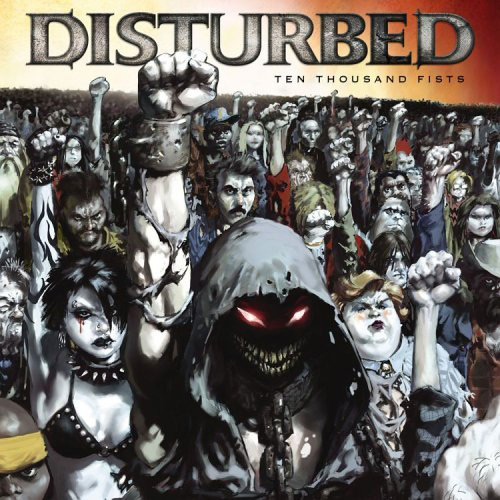
Disturbed Ten Thousand Fists Cover
Disturbed Ten Thousand Fists Review
Ten Thousand Fists is the third studio album by Disturbed. With the popularity of nu metal rapidly declining most bands in the subgenre chose to take another path and Disturbed are no exception to this as they embrace a sound that is somewhere between hard rock and traditional heavy metal for Ten Thousand Fists.
With the musicianship of drummer Mike Wengren and guitarist Dan Donegan being heavily contained on Disturbed’s nu metal albums for the most part, Ten Thousand Fists makes its evident that they want to do more or at the least get back to the level that they were at when playing groove metal under the name Brawl.
The songs are faster, sound more powerful and for the first time there are guitar solos to be heard on several songs including Stricken, Overburdened, Forgiven, Avarice and Land of Confusion, an unexpected cover of a Genesis song that translates exceptionally well into their new sound. There aren’t any weak songs to be found per se but after a few listens it can start to sound a bit played out due to the lack of variety, which isn’t helped by a 56 minute running time and it seems hard trying to justify the length of it for this reason.
David Draiman’s vocals are as strong as ever and on I’m Alive he cleverly enunciates the words rage and anger when he sings “change again, cannot be considered/I rage again, dispelling my anger” for effect without having to resort to shouting. However his trademark barking noise from The Sickness make an appearance on the title track, Sons of Plunder, Forgiven and Avarice but is absent from most songs.
His lyrical themes have now progressed onto topics such as war and personal struggles with Decadence addressing self harm and I’m Alive dealing with the pressure of others trying to influence the bands artistic direction to create something that wouldn’t be Disturbed and their subsequent rejection of this.
Overburdened looks at people killing others in the name of religion or political ideology only to finding themselves queueing up to enter Hell, which is overburdened by the sheer number of people caught up in harmful ideology all while thinking that they’re fighting for a righteous cause. At the start of the song one of these people reflects on this by saying “Fate is so unkind/Now I should have known/Blind leading the blind/Reaping what I’ve sown/If it all amounts to nothing/Why, then, am I standing in this line?” after believing that they were right in doing what they did. David Draiman puts a different lens on this perspective to infer that “holy blessed homicide” is wrong in any context and that people that believe otherwise have been misled, possibly for the gain of others.
The improved musicianship and deeper lyrical content that has come with the change in sound will surely have won over some new fans and there are many infectious hooks that will get stuck in your head for days after hearing them but on repeated listens some songs will start to wear thin due to the rank and file nature of the album.
Performers:
David Draiman: Vocals Dan Donegan: Guitar, electronics Mike Wengren: Drums, percussion John Moyer: Bass guitar
Artist: Shylmagoghnar Album: Emergence Genre(s): Heavy Metal Subgenres(s): Black Metal, Progressive Metal Released: 2014 Length: 52 minutes Language(s): English Label(s): N/A
Track List:
01. I Am the Abyss
02. Emergence
03. Edin in Ashes
04. This World Shall Fall
05. Squandered Paradise
06. Eternal Forest
07. The Cosmic Tide
08. A New Dawn
09. The Sun No Longer
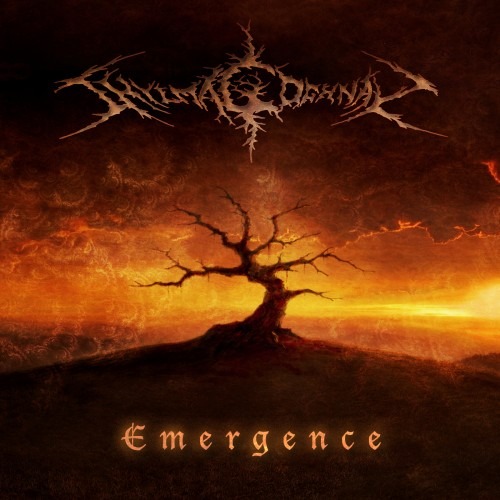
Shylmagoghnar Emergence Cover
Shylmagoghnar Emergence Review
Emergence is the self-released debut album of Dutch metallers Shylmagoghnar. While the core of the band’s sound is black metal they take cues from progressive metal to create longer, multi-faceted passages without ever needing to resort to self-indulgent musicianship. There are also influences from melodic death metal, most notably on the lead guitar, and the band makes good use of this along with tasteful keyboard arrangements to contrast with the black metal aesthetic which manages to be polished and accessible without attempting to pander to anyone.
There are 4 instrumental songs to be heard on Emergence. Eternal Forest and The Cosmic Tide are both performed in the aforementioned black metal/progressive metal style whereas I Am the Abyss has noticeable influence from post rock/metal and is the longest song on the album at 9 minutes. This is a bold introductory song that grabs your attention and establishes Shylmagoghnar’s musical vision while expressing a great deal of personality and depth so effortlessly.
The Sun No Longer is the final instrumental song and it also brings Emergence to a close all while being the biggest curveball on the album. While Nimblkorg is the primary song-writer, this one was composed by vocalist Skirge and is played entirely on keyboards with a melancholic feeling that isn’t present on any of the other songs. The feeling found here is thematically linked to his lyrics which deal with misanthropy and the end of humanity by citing the self-inflicted death and destruction done to one another throughout history. He then proceeds to mockingly cry “Hail the glorious humankind – Hail! Hail the splendour of our kind!” on Squandered Paradise to express his contempt.
While these themes are prominent throughout Emergence the tone changes on A New Dawn when Skirge reflects on his negative assessment of humanity and conclude that “what’s done is done; the dice were cast/and the only path before us lies/striding towards the riches of a new dawn”. Lyrically this leaves Emergence on a hopeful note and looking at the previous songs it appears as though they chronical the duo struggling with the seemingly endless troubles of the world (we once gave in/to endless waves of melancholy/the weight of the world/and the torment of troubled souls) before having an epiphany that allowed them to push on.
This World Shall Fall is another curveball found earlier in the album that is best described as “black metal without the guitars”. The tempo slows down and the focus is put on a drum and keyboard combination that is used to create a unique atmosphere that sets it apart from the other songs.
Emergence is an ambitious debut album that blends different subgenres of heavy metal together while showcasing some adventurous song-writing abilities that never fall short of the mark. Shylmagoghnar aren’t afraid to throw themselves in at the deep end and if they can continue down this path they will undoubtedly carve out a well-deserved niche within the heavy metal community.
Performers:
Nimblkorg: Music, guitars, bass, drums, synths, vocals/lyrics on Emergence, mixing and mastering Skirge: Vocals, lyrics, music and synths on The Sun No Longer, additional compositions
Believe is the second album by nu metallers Disturbed. Following the massively successful release of The Sickness, you could have easily expected Disturbed to follow up in a similar fashion but that isn’t the case because they have chosen to shed off many of their defining traits to start on a new path for Believe.
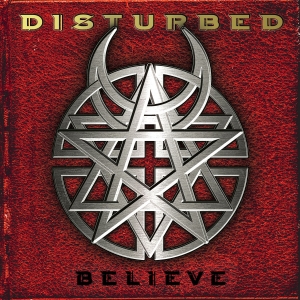
The confrontational singing style and angsty lyrics have been scrapped in favour of highlighting David Draiman’s highly melodic singing abilities with his lyrics now taking a closer look at religion and spirituality, which is also depicted on the albums cover as a mix of the Christian crucifix, Islamic crescent, Jewish star of David and a Wiccan pentacle. The only song on Believe to feature any of his distinguishing barking noises is Intoxication so for anyone that is put off by that on The Sickness will find Believe much more welcoming.
The electronic elements have disappeared almost entirely with the tiny exceptions being the glitchy vocals at the start of Liberate and then the keyboards at the start of Remember and on the bridge of Mistress. Another rare moment is the final song, Darkness, which is an artfully crafted piano ballad that will catch most listener’s off-guard. It also proves that the band is capable of expressing themselves in an entire different way when they want to. It also happens to be the only song to feature an acoustic guitar as well as cellist Alison Chesley.
Devour picks up a lot of momentum right at the end before coming to a sudden stop and it’s hard not to think that this could have easily transitioned into a new verse or even something slightly progressive but instead of tip-toing around something new Disturbed strictly adheres to their radio friendly format. That isn’t to say that there is anything inherently wrong with this, despite it almost feeling intentional at times, but it would have been interesting to hear the band tackle something more challenging.
Despite the sudden shift into a highly accessible and melodic style, Believe is still a nu metal album that focuses on straightforward guitar riffs and stays away from any form of flashy showmanship. In contrast to this, the rejection of angsty lyrics and aggression in general makes Believe one of nu metals most mature efforts by the simple virtue of escaping these common elements. Whether you consider Believe to be a streamlined or a stripped back effort will depend entirely on your perspective of the band and the subgenre.
Performers:
David Draiman: Vocals Dan Donegan: Guitar, keyboards Steve Kmak: Bass guitar Mike Wengren: Drums, percussion Alison Chesley: Cello